
Key Takeaways
- Online ordering systems boost average order value by up to 20%, giving customers more time to explore menus and add extras without the pressure of in-store wait times.
- Restaurants gain powerful customer insights through digital ordering platforms, helping them analyze purchase behavior, popular dishes, and trends for better targeting.
- Digital ordering enables cost-effective restaurant marketing, reaching customers around the clock through social media and online channels—without costly ad campaigns.
- Online food ordering expands customer reach, allowing restaurants to serve beyond their physical seating limits while simplifying expense tracking and order fulfillment.
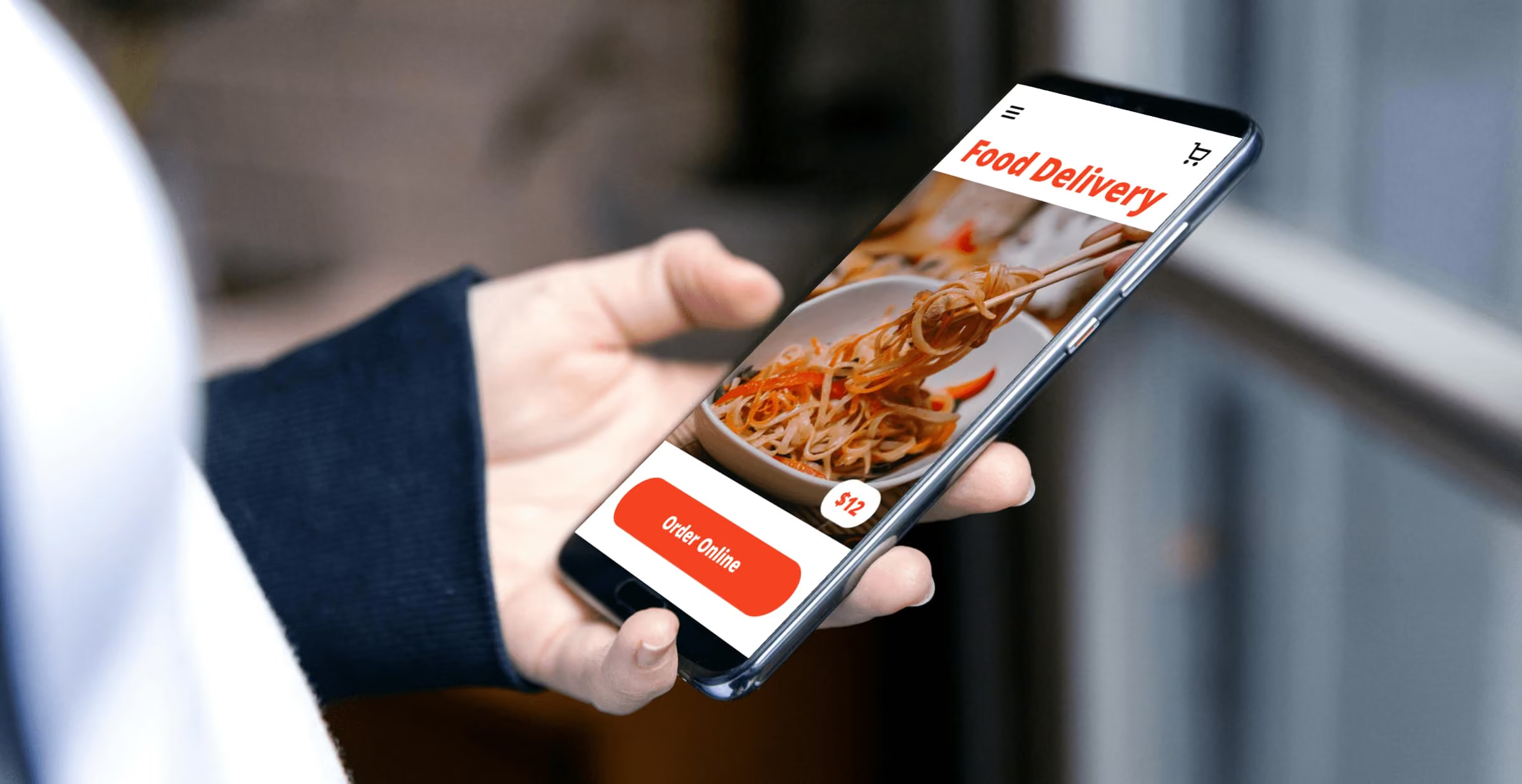
We're digital nomads, living in an increasingly connected world where convenience is king. One thing we've learned through this digital evolution is that whatever we want or need can be obtained with just a few clicks on our smart devices—including food to satisfy our diverse cravings throughout the week.
As a restaurant owner, you've likely noticed how customer expectations have shifted dramatically. Today's diners expect the ability to place orders online without hassle. If you haven't yet implemented an online food ordering system for your restaurant, you're missing significant opportunities to grow your business in today's digital marketplace.
Why Online Ordering is Essential for Modern Restaurants
The restaurant landscape has transformed dramatically in recent years. With the rise of digital technology, customers now expect seamless online ordering experiences as a standard service. This shift isn't just a passing trend—it represents a fundamental change in how people interact with restaurants.
Many restaurant owners feel overwhelmed by the array of technology options available, wondering if the investment will truly pay off. You might see competitors adopting online ordering systems while hearing mixed messages about costs, complexity, and commission fees that eat into your profits.
The truth is that online food ordering systems offer numerous advantages for both restaurants and customers. While the initial setup might seem daunting, the long-term benefits—increased revenue, improved operational efficiency, and enhanced customer relationships—make it an essential investment for restaurants looking to thrive in today's market. Discover the advantages of a food ordering system for restaurants and how it can transform your business.
9 Advantages of Online Ordering
Implementing a commission-free online ordering system offers numerous benefits that can transform your restaurant operations and boost your bottom line. Here's a comprehensive look at the nine key advantages:
1. Simplifies the Ordering Process and Reduces Errors
Traditionally, customers had to make phone calls to place orders or drive to restaurants for takeout, then wait for food preparation and delivery. Phone orders often resulted in miscommunications and errors, creating frustration for both customers and staff. These methods aren't ideal for today's busy consumers who value efficiency and accuracy.
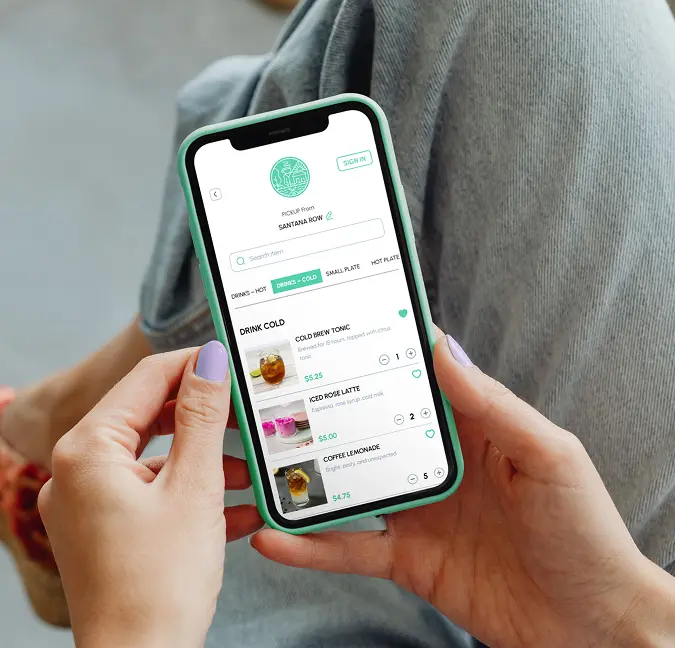
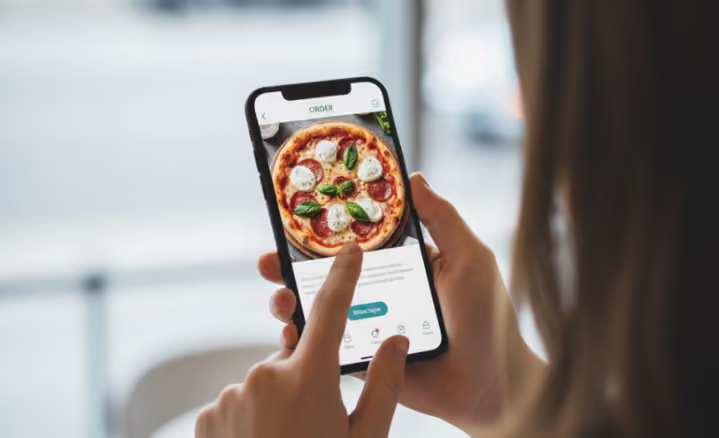
Online ordering systems eliminate these pain points by providing a clear, visual menu where customers can browse at their leisure, select exactly what they want, and specify special instructions without the pressure of a phone conversation. This digital approach significantly reduces order errors while giving customers the time to explore your full menu, including add-ons and special offers.
2. Efficient Customer and Order Management with CRM Integration
An online ordering system enhances the customer-restaurant relationship by providing end-to-end Customer Relationship Management (CRM) capabilities. The system offers a complete sales dashboard with information about new, active, and canceled orders, lifetime sales details, and customer history—all accessible in one centralized location.
Order Management and Inventory Control
Online ordering systems streamline order workflows by automatically routing orders to kitchen displays, tracking preparation times, and managing inventory in real-time. This reduces waste, prevents overselling out-of-stock items, and ensures consistent order fulfillment across all channels.
3. Real-Time Expense and Profit Monitoring
One of the most significant benefits of an online ordering system is the ability to monitor your restaurant's financial performance in real-time. The system provides precise information about cash flow, allowing you to track costs incurred during order preparation and compare them to customer pricing—all while maintaining visibility into profitability.
4. Cost-Effective Digital Marketing & Social Media Engagement
Having a strong online presence means being visible to your customers 24/7 without investing in expensive traditional advertising like media campaigns and billboards. The internet provides a cost-effective marketing channel through your website and social media platforms like Facebook and Instagram, allowing you to reach your target audience at a fraction of traditional marketing costs.
5. Access to Rich Customer Data and Analytics for Personalization
Who are your regular customers? What do they prefer ordering from your restaurant? Which menu items are most popular? Are customers aware of your promotions and offers? Do they prefer ordering via website or mobile app? A robust online ordering system answers these questions through comprehensive analytics and insights.
6. Convenience of Mobile and Multi-Device Ordering
From business meetings to crowded venues, there are many situations where customers can't easily make phone calls to order food. Online ordering systems allow customers to place orders anytime, anywhere using their smartphones, tablets, or other devices without disrupting their activities or compromising their privacy.
7. Gain Competitive Advantage with Commission-Free Technology
Did you know only 2-3% of restaurants worldwide currently offer online ordering capabilities? This presents a tremendous opportunity to differentiate your business from competitors who haven't yet embraced digital ordering technology.
8. Increase Average Order Value and Grow Revenue
According to research conducted by Restolabs, online orders are 20% larger on average than traditional orders, directly translating to increased revenue. When customers can browse your menu without feeling rushed by phone operators or long lines, they spend more time exploring options and are more likely to add appetizers, sides, or desserts to their orders.
9. Expand Customer Reach Beyond Physical Capacity
Your restaurant's physical seating capacity might be limited to 100-200 customers at a time, but with online ordering, you can simultaneously reach thousands of potential customers without additional infrastructure investments. A well-integrated online ordering system allows you to serve a virtually unlimited number of customers for takeout and delivery orders.
Benefits of Online Food Ordering for Customers
Understanding customer benefits helps you market your online ordering system more effectively and improve adoption rates:
- Convenience and Time-Saving: Order from anywhere, anytime without waiting on hold or in line
- Order Accuracy: Visual menu selection eliminates miscommunication and ensures orders are exactly as desired
- Menu Transparency: Complete ingredient lists, nutritional information, and pricing displayed clearly
- Flexible Payment Options: Credit cards, digital wallets, and contactless payment methods
- Order History and Reordering: Quickly reorder favorite meals with saved preferences
- Real-Time Order Tracking: Know exactly when food will be ready for pickup or delivery
Key Features to Look for in an Online Food Ordering System
When evaluating online ordering platforms, prioritize these essential features:
- Menu Customization: Easy-to-update digital menus with photos, descriptions, and modifiers
- POS Integration: Seamless connection with your existing point-of-sale system
- Analytics and Reporting: Detailed insights into sales, customer behavior, and menu performance
- Mobile Optimization: Responsive design that works perfectly on smartphones and tablets
- Customer Support: Reliable technical support and training resources
- Commission-Free Model: Flat-rate pricing instead of per-order commissions
How to Set Up Your Online Ordering System Quickly
Implementing an online ordering system might seem daunting, especially if you've been telling yourself it's too complicated or expensive for your restaurant. However, modern platforms make the process straightforward, allowing you to get up and running quickly with minimal technical expertise.
Choosing the Right Commission-Free Platform
The first step in setting up your online ordering system is selecting the right platform for your restaurant's specific needs. When evaluating options, consider these key factors:
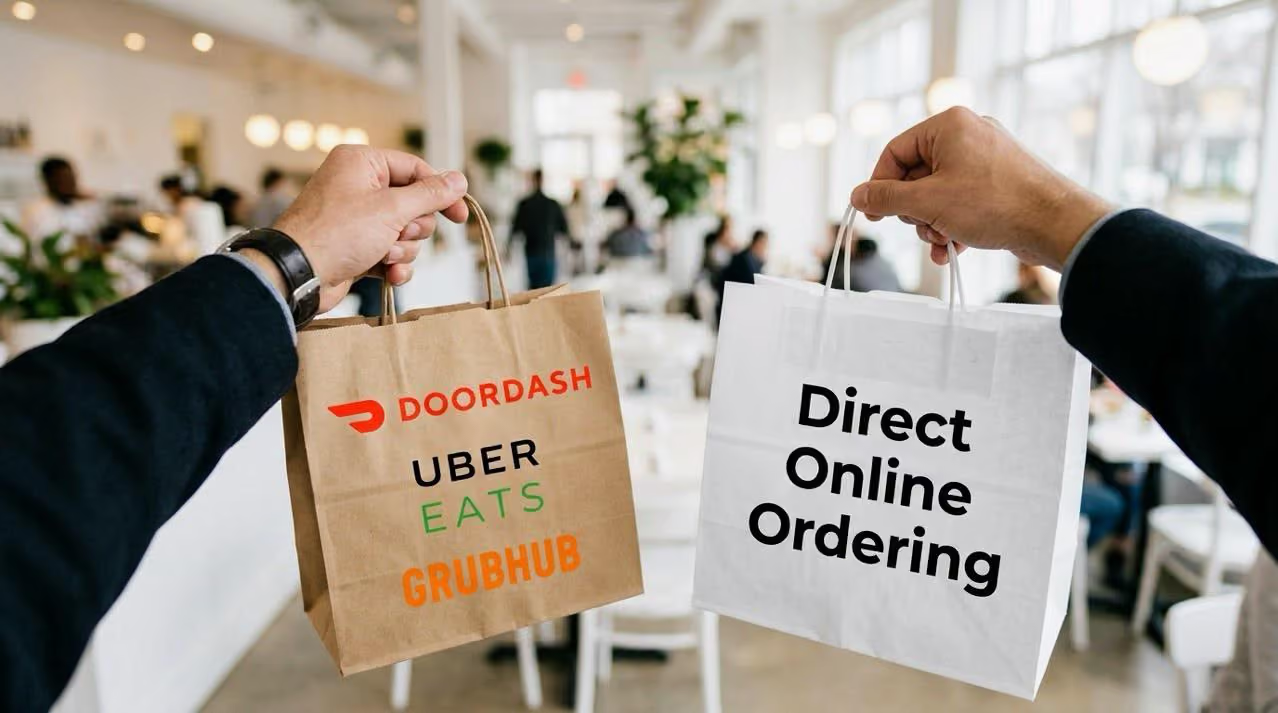
- Commission structure: Many third-party platforms charge commissions of 15-30% per order, significantly impacting your profitability. Commission-free platforms like Restolabs offer flat-rate pricing models that allow you to keep more of your hard-earned revenue.
- Customer data ownership: Ensure the platform gives you complete access to and ownership of your customer data, enabling personalized marketing and relationship building.
- Ease of setup and use: Look for intuitive interfaces that your staff can quickly learn without extensive training.
- Customization options: Your online ordering system should reflect your brand identity and accommodate your unique menu structure.
- Mobile compatibility: Verify that the platform works seamlessly across all devices, particularly smartphones.
- Support services: Choose a provider that offers reliable customer support to address any issues that arise.
Restolabs offers a commission-free online ordering platform specifically designed for restaurants of all sizes. With customizable menus, seamless POS integration, and comprehensive analytics, the system provides everything needed to launch your online ordering service quickly while maintaining control of your customer relationships and data.
Make Your Restaurant Future-Ready Now!
Millions of restaurants are venturing into the digital space by launching their own in-house online ordering websites or mobile apps. Restaurant owners have recognized that investing a relatively small amount monthly in these technological solutions ensures they can meet the evolving demands of today's tech-savvy consumers.
Customers have grown accustomed to the convenience and safety that online ordering provides and prefer engaging with restaurant brands that offer digital ordering and doorstep delivery options. This shift in consumer behavior isn't temporary—it represents a fundamental change in how people interact with restaurants.
Read how Online Ordering and Delivery can help your business see the other side of adversity
Setting up an online ordering system positions your restaurant for efficiency, growth, and steady revenue increases.
Most people spend hours online daily. By implementing a commission-free online ordering system coupled with effective marketing strategies, you'll not only meet your customers where they already are but also distinguish yourself as an innovative business that values customer convenience.
If you're new to online ordering, consider encouraging customers to try your platform by offering special discounts or promotions for first-time online orders. This approach helps build momentum and familiarizes your customer base with the new ordering process.
Why Choose Restolabs?
Want to learn more about how a commission-free online ordering system can transform your restaurant business? Book a live demo with one of our online ordering specialists today and claim your 30-day free trial!

Bharti Batra has extensive experience in restaurant technology and business operations. She writes about digital transformation in the hospitality industry, helping restaurants streamline processes and enhance efficiency. With a deep understanding of scaling and optimizing restaurant tech, she shares insights to help businesses grow.
Frequently Asked Questions
Initial costs for setting up an online ordering system typically include setup fees, website development, menu digitization, and staff training. Ongoing expenses usually involve monthly subscription fees, payment processing fees, and occasional system updates. However, Restolabs offers a commission-free pricing model with transparent flat-rate monthly subscriptions, eliminating the 15-30% per-order commissions charged by third-party platforms. This predictable cost structure allows restaurants to scale their online ordering without watching their margins shrink as sales increase.
Restolabs seamlessly integrates with popular restaurant POS systems through API connections, ensuring orders flow directly from your online platform to your existing kitchen operations without manual re-entry. The system also connects with various delivery management tools, allowing you to track deliveries in real-time whether using your own drivers or third-party services. These integrations eliminate double-entry, reduce errors, and create a unified workflow that streamlines operations from order placement through delivery confirmation, saving staff time and improving the customer experience.
Yes, Restolabs supports multi-location restaurant management through a centralized dashboard that allows you to control menus, pricing, promotions, and reporting across all your locations. Customers can select their preferred location when ordering, and the system automatically routes orders to the appropriate restaurant. You can customize menus and pricing for each location while maintaining consistent branding across your entire restaurant group. This centralized management approach saves time and ensures brand consistency while still allowing for location-specific customizations when needed.
Online ordering systems increase average order value through several built-in features: automated upselling prompts that suggest complementary items based on cart contents; visual menu displays that showcase appetizers, sides, and desserts more effectively than verbal descriptions; and the absence of time pressure that allows customers to browse the complete menu at their leisure. Additionally, you can implement strategic pricing for combos and meal deals, highlight high-margin items, and create limited-time offers that encourage larger purchases. These features collectively contribute to the 20% larger average order sizes typically seen with online ordering compared to phone orders.
Effective marketing tools for promoting your online ordering website include social media integration that allows customers to share their orders directly to their networks; email marketing campaigns targeting your customer database with personalized offers; Google My Business optimization that highlights your online ordering capability in local search results; QR codes on printed materials that link directly to your ordering platform; and in-store signage promoting digital ordering benefits. Restolabs also provides analytics that help you identify your most valuable customers for targeted loyalty programs and promotions, maximizing your marketing ROI through data-driven decision making.
Advantages include 20% higher average order value, reduced errors, 24/7 availability, and complete customer data ownership. Disadvantages include initial setup time, technology dependence, customer adoption period, monthly subscription costs, and need for reliable internet. However, the benefits significantly outweigh the drawbacks for most restaurants.








.webp)

.svg)
.webp)