
Key Takeaways
- Direct online ordering helps restaurants reduce reliance on commission-heavy third-party apps and keep more revenue from every order.
- Customer data ownership gives operators better insight into repeat orders, menu performance, and targeted promotions.
- The best ordering systems integrate with POS, payments, delivery, loyalty, and analytics tools to reduce manual work and errors.
- Restaurants should choose a platform that is simple for staff, easy for guests, and scalable across locations — with commission-free pricing.
If a restaurant still depends on phone orders, third-party marketplaces, and manual order entry, growth gets expensive fast. Every new order can bring more staff pressure, more chances for mistakes, and another commission fee cutting into already-thin margins.
That is why online ordering technology matters. The right system does not just put a menu online — it helps restaurants accept direct orders, keep customer relationships, and run digital sales without adding operational chaos.
Restaurant technology used to feel optional. Today, it shapes how guests discover a restaurant, place an order, pay, leave feedback, and come back again.
For many restaurants, the question is no longer whether to accept online orders. The real question is whether those orders should belong to the restaurant or to a third-party platform charging commissions and controlling the customer relationship.
Planning and execution still matter, but restaurant growth now depends on something more practical: the systems behind each order. When online ordering, payments, delivery, and customer data work together, restaurants can scale without making daily operations harder.
How to Grow an Online Food Business: Step-by-Step Plan
Restaurant operators who grow direct orders consistently tend to follow a clear progression. It is not about doing everything at once — it is about getting the right foundations in place before scaling.
- Set a clear growth goal — Define whether the target is more orders, higher average order value, more repeat customers, or all three.
- Build a strong online foundation — Ensure the restaurant has a branded website, quality menu, and operational capacity to fulfill online orders reliably.
- Optimize the online menu — Structure menu categories, add appetizing photography, write clear descriptions, and use modifiers and upsells to increase order value.
- Set up direct ordering — Launch a commission-free direct online ordering system so guests can order without going through a third-party marketplace.
- Promote across digital channels — Use social media, local SEO, email campaigns, and referral programs to drive traffic to the direct ordering experience.
- Retain customers — Build loyalty programs, post-order follow-ups, and personalized promotions that turn first-time buyers into regulars.
- Track and improve — Monitor order volume, average order value, repeat order rate, and menu profitability to guide ongoing decisions.
Why Online Ordering Is Essential for Restaurant Growth
A pizzeria taking Friday-night delivery orders, a cafe selling advance pickup slots, and a ghost kitchen managing multiple virtual brands all face the same problem: customers expect ordering to be fast, accurate, and available from their phones. If the restaurant cannot offer that experience directly, diners often default to third-party apps — and the restaurant pays for it in commissions.
Delivery-only kitchens represent one growth model, with low overhead and flexible setup across multiple areas. But the underlying principle applies to any restaurant format: reducing friction between a customer and an order is one of the most direct ways to increase sales.
Delivery-only restaurants are designed to bring food closer to the consumer — but without a direct ordering channel, they hand that customer relationship to a third-party platform instead.
The most important step for any restaurant selling online — whether delivery-only, fast casual, or multi-location — is making the business accessible through a direct online ordering system. The reasons to invest in direct ordering go beyond convenience: lower costs, full customer data ownership, and no commissions eroding every sale.
Direct Online Ordering vs. Third-Party Marketplace: A Quick Comparison
How Direct Ordering Improves Customer Engagement and Retention
Customer data is one of the biggest advantages of direct online ordering. When restaurants own order history, contact details, popular items, and repeat purchase behavior, they can make smarter decisions instead of relying on reports locked inside third-party platforms.
That data changes everyday decisions. A restaurant can spot which dishes drive repeat orders, identify peak ordering windows, send targeted promotions, and adjust inventory before waste eats into margins. When a busy Friday-night service reveals that two menu items account for 40% of orders, restocking strategy changes immediately.
A smooth ordering experience is not a small detail. When guests can browse the menu, customize items, pay quickly, and receive accurate updates, they have fewer reasons to switch back to a marketplace app.
Customers can browse without interruption, take their time deciding, choose delivery or pickup, and pay through their preferred method. A frictionless experience — built on the restaurant's own brand — keeps guests coming back without a platform taking a cut.
Tactics That Reduce Ordering Friction
- Guest checkout — Let customers order without creating an account to reduce drop-off.
- Saved addresses and reorder buttons — Speed up repeat purchases for returning guests.
- Multiple payment options — Support credit cards, digital wallets, and contactless payment.
- Order tracking — Give customers real-time updates so they stay informed and staff fielded fewer calls.
- Mobile-first design — Optimize the ordering flow for smartphones, where most food orders originate.
- Menu modifiers — Allow customization (size, toppings, dietary swaps) directly within the order flow.
Most customers browse and order on mobile devices. A direct ordering experience that is fast and frictionless on a phone keeps the restaurant in their path every time they are hungry.
How Online Ordering Increases Restaurant Sales
Direct online ordering increases restaurant sales in ways that go beyond simply offering a digital menu. A strong ordering presence, combined with proactive customer engagement, creates a compound effect: more orders, higher average values, and stronger retention.
When guests have a reliable direct ordering experience, they are more likely to recommend the restaurant, leave positive feedback, and return without needing a marketplace reminder. If the restaurant offers a referral program, loyal customers can invite friends and family to order directly. That turns repeat guests into a lower-cost acquisition channel.
Reviews and social proof can turn a good ordering experience into a growth loop. Positive ratings on Google and food review platforms bring in new customers who might not have found the restaurant otherwise. Each strong review reduces the cost of acquiring the next customer.
Create an Online Menu That Drives More Orders
The online menu is the restaurant's most important sales tool. What gets shown, how it is described, and what it costs directly determines how much a customer orders — and whether they come back.
- Professional food photography — Dishes with high-quality images consistently outperform those without.
- Clear categories and descriptions — Organize the menu logically. Write descriptions that emphasize flavor, ingredients, and portion size.
- High-margin item placement — Feature profitable items prominently at the top of each category.
- Modifiers and upsells — Allow guests to add extras (sauces, toppings, sides) and suggest combo upgrades at checkout.
- Dietary labels — Flag vegetarian, vegan, gluten-free, and allergen information clearly.
- Limited-time items — Seasonal or time-limited offerings create urgency and drive repeat visits.
- Remove low-performers — Use order data to identify dishes that rarely sell and replace them with items that drive higher margins.
Restaurants evaluating a direct online ordering system should verify that the platform supports menu customization, modifiers, and image uploads natively — without requiring a developer every time the menu changes.
Promote Your Restaurant Across Digital Channels
Building a direct ordering channel is only half the equation. Driving traffic to it requires consistent promotion across the platforms where customers spend their time.
Key Digital Marketing Tactics for Restaurants
- Social media — Post food photography, behind-the-scenes content, limited-time offers, and customer testimonials on Instagram, Facebook, and TikTok to stay visible between orders.
- Email campaigns — Send weekly specials, new menu announcements, and loyalty rewards to customers who have already ordered. The cost per re-order is far lower than acquiring a new customer.
- SMS offers — Time-sensitive SMS promotions convert well because they reach customers directly on the device they use to order.
- Referral programs — Reward existing customers for sharing the ordering link with friends. This keeps acquisition costs low while growing the customer base organically.
- Review generation — After each order, prompt customers to leave a review. A consistent stream of fresh reviews improves both trust and local search visibility.
- Influencer partnerships — Local food bloggers and micro-influencers can introduce the restaurant to an engaged, relevant audience at lower cost than paid advertising.
- Retargeting ads — Use pixel-based retargeting to re-engage website visitors who browsed the menu but did not place an order.
Use Local SEO to Attract Nearby Customers
Restaurant demand is geographically constrained. A customer in one neighborhood rarely orders from a restaurant ten miles away. That makes local search visibility one of the highest-ROI investments a restaurant operator can make.
- Google Business Profile — Keep the listing complete and updated with accurate hours, menu link, photos, and the direct ordering URL.
- Location pages — Multi-location restaurants should have a dedicated, keyword-optimized page for each location.
- Local keywords — Include city, neighborhood, and cuisine-type terms naturally in page titles, menu descriptions, and blog content.
- Near-me search optimization — Ensure the website loads quickly on mobile and includes structured address data so search engines can surface it for near-me queries.
- Delivery-area pages — Create pages targeting the neighborhoods or zip codes within the delivery radius to capture hyperlocal search intent.
- Review management — Respond to all reviews — positive and negative — to signal an active, trustworthy business to both Google and potential customers.
Scale with Loyalty, Referrals, and Repeat Orders
Acquiring a new customer is five to seven times more expensive than retaining an existing one. Restaurants that build retention programs into their ordering system grow faster and at lower cost than those focused purely on acquisition.
- Loyalty points — Reward every direct order with points redeemable on future purchases, giving customers a reason to skip the marketplace app.
- First-to-second-order campaigns — Send an automated offer within 48 hours of a first order to convert new customers into regulars.
- Birthday and anniversary offers — Personalized promotions tied to guest milestones drive higher conversion than generic discount blasts.
- Email and SMS reactivation — Identify customers who have not ordered in 30 or 60 days and trigger a targeted re-engagement offer.
- Post-order review requests — A simple automated follow-up after delivery asking for a review builds credibility and local SEO simultaneously.
- Personalized promotions — Use order history data to send offers tied to a customer's most-ordered items rather than generic sitewide discounts.
What to Look for in an Online Ordering System
Choosing the right platform is one of the most consequential decisions a restaurant operator will make. The wrong system adds complexity. The right one removes it — and keeps growing with the business.
Here are the key factors restaurant operators should review before choosing an online ordering partner:
1. Brand Customization
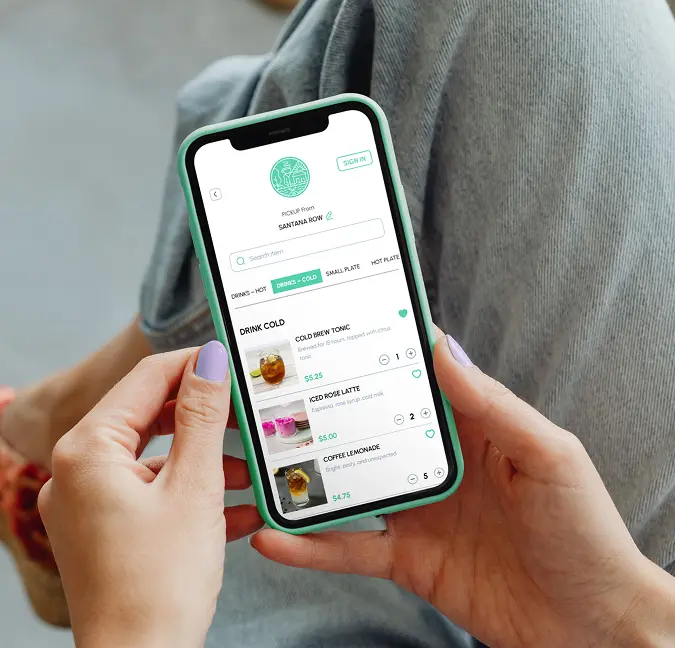
The ordering experience should feel like the restaurant's brand, not a generic marketplace page. Operators should be able to customize menus, images, modifiers, ordering flows, and mobile app experiences so guests can order directly with confidence.
2. Simple and Quick Ordering
The fewer steps between menu browsing and payment, the better. A strong restaurant online ordering system should make it easy for guests to customize items, choose pickup or delivery, pay securely, and receive clear order updates without needing to create an account.
3. Ease of Integration
Restaurants should check whether the platform integrates with the tools already running the operation — including POS systems, payment processors, delivery partners, analytics, and loyalty tools. The less staff need to copy orders between systems, the fewer mistakes reach the kitchen.
4. Commission-Free Pricing
The cost model matters as much as the ordering experience. A commission-based platform can look affordable at launch, but every successful order makes the restaurant pay more. A fixed, commission-free subscription gives restaurants a cleaner path to growth. As order volume increases, more revenue stays with the business instead of being paid out to third-party platforms.
5. Customer Data Ownership
Restaurants that own their customer data can re-market, personalize, and retain guests without depending on a platform to surface them again. Full access to order history and contact details is a non-negotiable for any restaurant serious about long-term growth.
6. Fast Setup and Flexible Plans
Restaurants should not need a long, complicated implementation to start selling online. Look for a platform with expert setup, simple menu onboarding, and flexible plans that do not lock the business into unnecessary long-term commitments.
7. Continued Innovation
Restaurant technology is evolving quickly — AI-assisted ordering, automated promotions, first-party data tools, and delivery integrations are table stakes in 2026. Partnering with a platform that invests in product development ensures the restaurant stays competitive as expectations shift.
Direct online ordering is growing faster than ever — and the restaurants that build it on a commission-free, data-owning foundation are the ones compounding growth year over year. Use the commission savings calculator to estimate how much a restaurant could be losing to third-party fees today.
How Restolabs Helps Restaurants Grow Direct Orders
The best online ordering system should make growth easier, not more complicated. Restolabs gives restaurants a commission-free way to accept direct orders, manage menus, own customer data, and connect the tools already running the business.
With expert setup, POS, delivery, and payment integrations, and flexible plans without long-term contracts, Restolabs is built for restaurants that want to sell online quickly while keeping more control over every order.

Team Restolabs is a group of hospitality tech experts, strategists, and innovators dedicated to helping restaurants thrive in the digital age. With deep expertise in branding, growth, product development, and restaurant technology, we provide insights on scaling, streamlining operations, and enhancing customer experience.
Frequently Asked Questions
Growing an online food business requires seven core steps: setting a growth goal, building a strong digital foundation, optimizing the online menu, launching a commission-free direct ordering system, promoting across digital channels (social media, email, local SEO), building a loyalty and retention program, and tracking key performance metrics. Technology ties all of these together by automating data collection, order management, and customer engagement.
Starting an online food business involves choosing a business model (delivery-only, dine-in with online ordering, ghost kitchen, or catering), setting up a branded website and menu, launching a direct online ordering system, and establishing a delivery or pickup workflow. Compliance requirements — including food safety permits, labeling, and local licensing — should be confirmed before launch.
Restaurants selling food online typically need a direct online ordering system (website and mobile app), a POS integration to receive orders automatically, a payment processor, delivery management tools, and an analytics or CRM tool to track customer behavior. Platforms like Restolabs bundle many of these capabilities into a single commission-free solution.
Restaurants can increase online orders by reducing checkout friction, optimizing the menu for higher-value items, running targeted promotions to past customers, building a loyalty program, improving local SEO to capture near-me searches, and consistently promoting the direct ordering link across social media and email. Owning customer data is the foundation — it enables re-marketing without platform dependency.
Direct online ordering gives restaurants zero-commission sales, full customer data ownership, complete branding control, and the ability to run their own promotions. Third-party apps provide marketplace visibility but charge 15–30% commission per order and retain the customer relationship. Most restaurant operators benefit from using direct ordering as their primary channel and third-party apps only for supplemental discovery.
The key metrics to track are: online order volume, average order value (AOV), repeat order rate, conversion rate from menu view to completed order, cart abandonment rate, customer acquisition cost, delivery time accuracy, review rating, and menu item profitability. Monitoring these on a weekly basis helps operators identify which growth levers are working and which need adjustment.
Restaurant online ordering technology refers to the software systems that allow guests to place pickup, delivery, or dine-in orders directly through a restaurant's website, mobile app, or QR code. It typically includes a digital menu, cart and checkout flow, payment processing, POS integration, order management, and customer data tools — all designed to replace phone orders and third-party marketplace dependency.


.jpg)
.jpg)
.jpg)



.webp)

.svg)
.webp)