
Key Takeaways
- White label restaurant software offers a low-cost entry point for entrepreneurs to start their own branded restaurant technology business
- The restaurant online ordering market continues to grow rapidly, with direct ordering becoming increasingly preferred over third-party platforms
- Resellers can generate recurring revenue while helping restaurants reduce commission fees and maintain control of their customer data
- Implementation is typically quick, allowing resellers to onboard clients in days rather than months
- Success metrics include customer retention, monthly active users, and subscription growth
The restaurant industry is one of the fastest-growing sectors in retail, with online food ordering becoming a dominant force. As technology evolves, customers now prioritize convenience, pushing restaurant owners to adopt online ordering solutions that streamline operations and enhance customer experiences.
What is White Label Restaurant Ordering Software?
White label restaurant ordering software is a pre-built, ready-to-deploy technology solution that businesses can rebrand and sell as their own product. Think of it like buying a fully-furnished house that you can repaint and decorate with your own style-the infrastructure is already built, but the appearance is customizable.
These platforms are developed by technology providers (like Restolabs) who handle the complex backend development, maintenance, and updates while allowing resellers or restaurants to apply their own branding, pricing structure, and customer experience elements.
For restaurants, white label solutions offer a way to accept online orders directly from customers through branded websites and mobile apps without building technology from scratch. For entrepreneurs and consultants, these platforms provide an opportunity to launch a restaurant technology business with minimal technical expertise or capital investment.
The core value proposition is simple: sophisticated technology + your brand = a custom-looking solution without custom development costs or timelines.
White Label vs. Third-Party Aggregator Solutions
Understanding the key differences between white label platforms and third-party aggregators is essential for making informed business decisions:
While third-party platforms offer immediate visibility, they create a significant barrier between restaurants and their customers. White label solutions prioritize brand control, data ownership, and long-term profitability over instant marketplace presence.
The Rise of Online Ordering in the Restaurant Industry
- Online ordering now accounts for 6.6% of total restaurant orders, surpassing phone orders (5%).
- 25% of consumers have at least one restaurant app on their smartphone.
- The emergence of third-party delivery platforms has opened new revenue streams for small and medium-sized restaurants that previously lacked delivery capabilities.
However, while third-party platforms offer accessibility, they come at a cost-high commissions, reduced brand control, and dependency on external services. This is where white label restaurant software provides a superior alternative, allowing businesses to take control of their online ordering system at a fraction of the cost.
Key Features of White Label Restaurant Ordering Software
Modern white label restaurant ordering platforms offer comprehensive feature sets designed to enhance both restaurant operations and customer experiences:
Customer-Facing Features
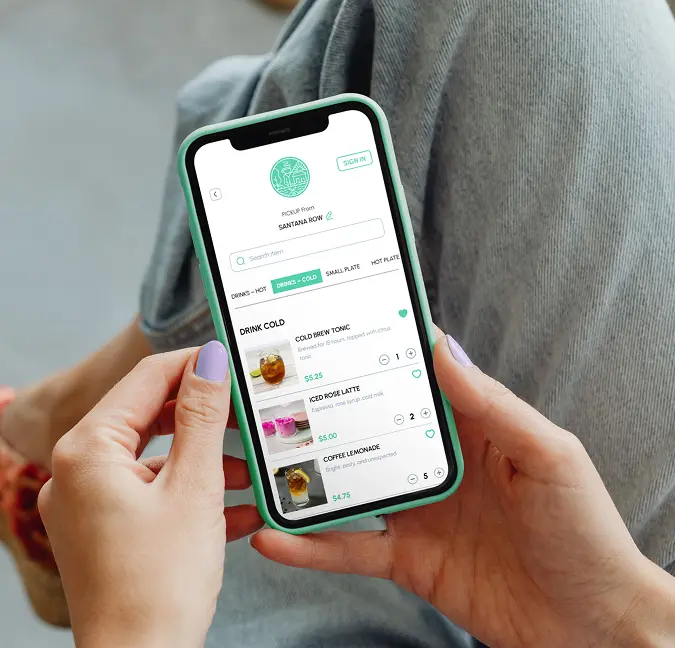
- Branded Mobile & Web Apps: Fully customizable interfaces with restaurant logos, colors, and branding elements that create a seamless extension of the restaurant's identity
- Real-Time Order Tracking: GPS-enabled tracking that keeps customers informed about their order status from preparation to delivery
- Integrated Payments: Support for multiple payment methods including credit cards, digital wallets, and contactless options
- Loyalty & Rewards Programs: Built-in functionality to create and manage points systems, special offers, and repeat customer incentives
- Personalization: Ability to save favorite orders, delivery addresses, and payment methods for faster checkout
Restaurant Management Features
- Order Management Dashboard: Centralized system for receiving, confirming, and processing online orders
- Menu Management: Easy-to-use tools for updating menu items, prices, modifiers, and availability
- Analytics & Reporting: Comprehensive data on sales, popular items, peak ordering times, and customer behavior
- POS Integration: Seamless connection with existing point-of-sale systems to eliminate double-entry and streamline operations
- Marketing Tools: Email and SMS campaign capabilities to drive repeat business and promote special offers
Technical Infrastructure
- Cloud-Based Architecture: Reliable, scalable hosting that ensures platform availability during peak ordering times
- API Access: Integration capabilities with third-party systems including accounting, inventory, and CRM platforms
- QR Code Ordering: Contactless ordering options for dine-in customers
- Multi-Location Support: Centralized management for restaurant groups with location-specific customization
- Automated Notifications: SMS and email alerts for order confirmation, preparation, and delivery updates
These features combine to create a comprehensive digital ordering ecosystem that enhances operational efficiency while providing customers with a convenient, branded experience that builds loyalty and increases order frequency.
Why White Label Restaurant Software is in High Demand
Previously, setting up an online ordering system required significant investment, making it accessible only to large chains. Today, advancements in white label restaurant online ordering software have made it affordable and scalable for independent restaurants.
Key Benefits for Restaurants:
- Full control over branding, customer data, and promotions.
- No hefty commission fees imposed by third-party platforms.
- Seamless integration with existing restaurant operations.
- Direct customer relationships that foster loyalty and repeat business.
- Ability to implement targeted marketing campaigns based on order history.
For digital marketers, entrepreneurs, and restaurant consultants, becoming a white label restaurant software reseller presents an excellent business opportunity with multiple revenue streams and scalable growth potential.
Low-Cost Entry: Start Your Business with Minimal Investment
One of the biggest advantages of white label reseller programs is the low barrier to entry. Unlike developing software from scratch, a reseller program allows you to:
- Sell a fully developed, market-ready product under your own brand.
- Set your own pricing and revenue model.
- Offer a scalable solution without worrying about development, maintenance, or technical support.
With a trusted white label partner like Restolabs, you can launch your reseller business with a small monthly subscription fee, covering software maintenance, updates, and customer support.
Typical Pricing Models
- Subscription-Based: Monthly or annual fees ranging from $99-$499 per restaurant location
- Tiered Pricing: Basic, premium, and enterprise packages with feature-based differentiation
- Revenue Share: Lower upfront costs with percentage-based revenue sharing (typically 5-10% of transaction value)
When evaluating costs, consider both visible and hidden expenses. While the platform subscription is straightforward, it also accounts for payment processing fees (typically 2.5-3% per transaction), potential integration costs with existing systems.
Step-by-Step: How to Choose & Implement White Label Solutions
Successfully deploying a white label restaurant ordering solution requires careful planning and execution:
- Assess Needs
- Identify specific business requirements (online ordering, delivery management, loyalty programs)
- Determine integration needs with existing systems (POS, accounting, inventory)
- Establish budget parameters and ROI expectations
- Research Vendors
- Compare feature sets, pricing models, and platform reliability
- Review case studies and client testimonials
- Evaluate technical support and service level agreements
- Evaluate Features & Integrations
- Request demonstrations focusing on critical functionality
- Test mobile responsiveness and user experience
- Verify integration capabilities with existing systems
- Branding & Customization
- Develop branding guidelines for the platform
- Customize user interfaces to match restaurant identity
- Configure menu structure and product categories
- Testing & Launch
- Conduct thorough testing across devices and browsers
- Perform trial orders to verify end-to-end functionality
- Implement a soft launch before full public rollout
- Training & Support
- Train staff on order management and platform administration
- Establish support protocols for technical issues
- Create documentation for common procedures
- Marketing to Customers
- Promote the new ordering platform through all channels
- Offer incentives for first-time digital orders
- Gather and implement customer feedback
This methodical approach ensures smooth implementation and maximizes adoption by both staff and customers, leading to higher digital order volumes and operational efficiency.
The Rise of Online Ordering in the Restaurant Industry
- Online ordering now accounts for 6.6% of total restaurant orders, surpassing phone orders (5%).
- 25% of consumers have at least one restaurant app on their smartphone.
- The emergence of third-party delivery platforms has opened new revenue streams for small and medium-sized restaurants that previously lacked delivery capabilities.
However, while third-party platforms offer accessibility, they come at a cost—high commissions, reduced brand control, and dependency on external services. This is where white label restaurant software provides a superior alternative, allowing businesses to take control of their online ordering system at a fraction of the cost.
Why White Label Restaurant Software is in High Demand
Previously, setting up an online ordering system required significant investment, making it accessible only to large chains. Today, advancements in white label restaurant online ordering software have made it affordable and scalable for independent restaurants.
Key Benefits for Restaurants:
- Full control over branding, customer data, and promotions.
- No hefty commission fees imposed by third-party platforms.
- Seamless integration with existing restaurant operations.
For digital marketers, entrepreneurs, and restaurant consultants, becoming a white label restaurant software reseller presents an excellent business opportunity.
Low-Cost Entry: Start Your Business with Minimal Investment
One of the biggest advantages of white label reseller programs is the low barrier to entry. Unlike developing software from scratch, a reseller program allows you to:
- Sell a fully developed, market-ready product under your own brand.
- Set your own pricing and revenue model.
- Offer a scalable solution without worrying about development, maintenance, or technical support.
With a trusted white label partner like Restolabs, you can launch your reseller business with a small monthly subscription fee, covering software maintenance, updates, and customer support.
How to Succeed as a White Label Restaurant Software Reseller
- Choose the Right White Label Partner
- Ensure the software is user-friendly, mobile-optimized, and feature-rich.
- Look for robust customer support and ongoing updates.
- Select a partner that offers custom branding options and marketing materials.
- Verify reliability with uptime guarantees of 99.9% or higher.
- Target the Right Audience
- Independent restaurants that need a cost-effective online ordering solution.
- Multi-location restaurant owners looking for a centralized ordering system.
- Restaurant consultants and digital agencies wanting to expand their service offerings.
- Food service businesses with high delivery or takeout potential.
- Provide Value-Added Services
- Offer custom branding and integration with restaurant websites.
- Provide marketing services, such as SEO and social media management.
- Educate restaurant owners on how to drive direct orders and maximize revenue.
- Develop industry-specific expertise to become a trusted advisor.
Common Pitfalls to Avoid
- Underpricing your services and leaving insufficient margin for support costs
- Overpromising features that aren't fully supported by your white label platform
- Neglecting ongoing customer support after initial implementation
- Failing to stay current with platform updates and new features
Measuring Success as a Reseller
Starting a reseller business can be challenging, but success is easy to track with a white label solution:
- Positive customer feedback and repeat business.
- Growth in monthly active users on your platform.
- Increase in subscriptions and revenue.
- Customer retention rate (aim for 85%+ annually).
- Average revenue per restaurant client.
- Platform adoption metrics (percentage of orders through your system).
Recommended Tracking Tools
- CRM Systems: HubSpot or Salesforce for client relationship management
- Analytics Platforms: Google Analytics or dedicated restaurant analytics dashboards for usage metrics
- Financial Tracking: QuickBooks or Xero for revenue and subscription management
- Customer Satisfaction: NPS surveys or dedicated feedback tools
A Growing Market with Unlimited Potential
- 1+ million restaurant locations in the U.S. alone.
- 1.6 million new restaurant jobs projected by 2027.
- Online ordering sales expected to continue exponential growth.
- 76% of consumers prefer ordering directly from restaurants rather than third-party platforms when given the option.
- 67% increase in restaurants offering online ordering since 2019.
Industry forecasts predict that the global online food delivery market will reach $223 billion by 2027, growing at a CAGR of 11.4%. This growth is driven by changing consumer preferences, with 63% of consumers stating that ordering directly from a restaurant provides a better overall experience than using third-party platforms.
With more restaurants looking to take control of their online presence and eliminate costly third-party commissions, now is the perfect time to enter the market as a white label restaurant software reseller. The trend toward direct ordering channels shows no signs of slowing, creating sustained demand for branded ordering solutions.
Ready to Transform Your Restaurant Ordering Strategy?
White label restaurant ordering software represents a significant opportunity for both restaurants seeking to control their digital destiny and entrepreneurs looking to capitalize on the growing demand for branded ordering solutions. By eliminating commission fees, maintaining brand control, and owning customer data, these platforms deliver compelling advantages over third-party aggregators.
While implementation requires careful planning and vendor selection, the benefits far outweigh the challenges. Modern white label solutions combine sophisticated technology with simplified management, making digital transformation accessible to businesses of all sizes.
If you're ready to start your reseller journey or implement a direct ordering solution for your restaurant, partner with Restolabs today and build a profitable business in the ever-expanding restaurant technology industry.
Restolabs is an online ordering software for restaurants, catering, food trucks and other food services. You can reach us at info@restolabs.com for any suggestions or queries. We also have a white label restaurant online ordering reseller program. If you are interested you can reach us here.

Sruthi Sekar specializes in brand strategy, growth, and user experience in the hospitality industry. As the driving force behind Restolabs, she helps restaurants harness technology to scale and thrive. With a background in design, branding, and entrepreneurship, she brings a sharp focus on crafting digital experiences that drive real business impact.
Frequently Asked Questions
White label restaurant ordering software is a ready-made online ordering platform that restaurants can brand as their own, allowing them to accept orders directly from customers without building a custom solution.
Unlike third-party aggregators, white label solutions give restaurants full control over branding, customer data, and the customer experience, and typically avoid high commission fees.
Key features include branded mobile/web apps, real-time order tracking, integrated payments, loyalty programs, analytics, and integrations with POS or CRM systems.
Implementation time varies by provider but is usually much faster and less expensive than building a custom solution, often taking just a few weeks with predictable monthly or annual fees.
.jpg)
.jpg)
.jpg)
.jpg)






.webp)

.svg)
.webp)